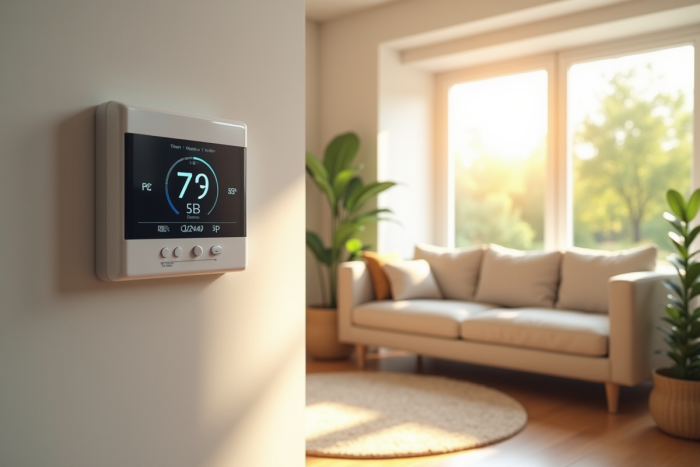
In winter, thermal comfort becomes a priority for many households. The thermostat, this discreet yet essential device, plays a central role in regulating indoor temperature. However, understanding its settings can seem complex for some.
Most thermostats offer a variety of options to adjust the ambient temperature according to specific time slots or personal preferences. These settings are not limited to simply increasing or decreasing the heat; they also influence energy consumption and, consequently, the heating bill. It is important to interpret and optimize these parameters to combine comfort and savings.
Understanding Your Thermostat Settings
The thermostat is at the heart of thermal management in your home. It sets the setpoint temperature, which is the desired temperature in a room, and controls the boiler to maintain this temperature. Some thermostatic valves, installed on your radiators, allow you to limit the temperature of each room by adjusting the flow of hot water.
The Different Types of Thermostats
There are several types of thermostats, each with its specific features:
- Programmable room thermostat: allows you to program specific time slots for different temperatures.
- Smart thermostat: offers the ability to control the temperature remotely via a mobile app.
- 8-degree thermostat: a useful setting to prevent pipe freezing during prolonged absences.
Optimizing Settings for Maximum Comfort
To optimize your thermal comfort, you need to understand how your thermostat works. For example, lowering the temperature by 1°C can reduce consumption by 7%. Lowering the heating at night or during absences can save up to 25% on your energy bill.
| Scenario | Recommended Setting |
|---|---|
| Night | 16-18°C |
| Prolonged Absence | 8-degree thermostat |
| At Home | 19-21°C |
Every degree counts. Adjust your settings according to your needs to ensure optimal comfort and achieve energy savings.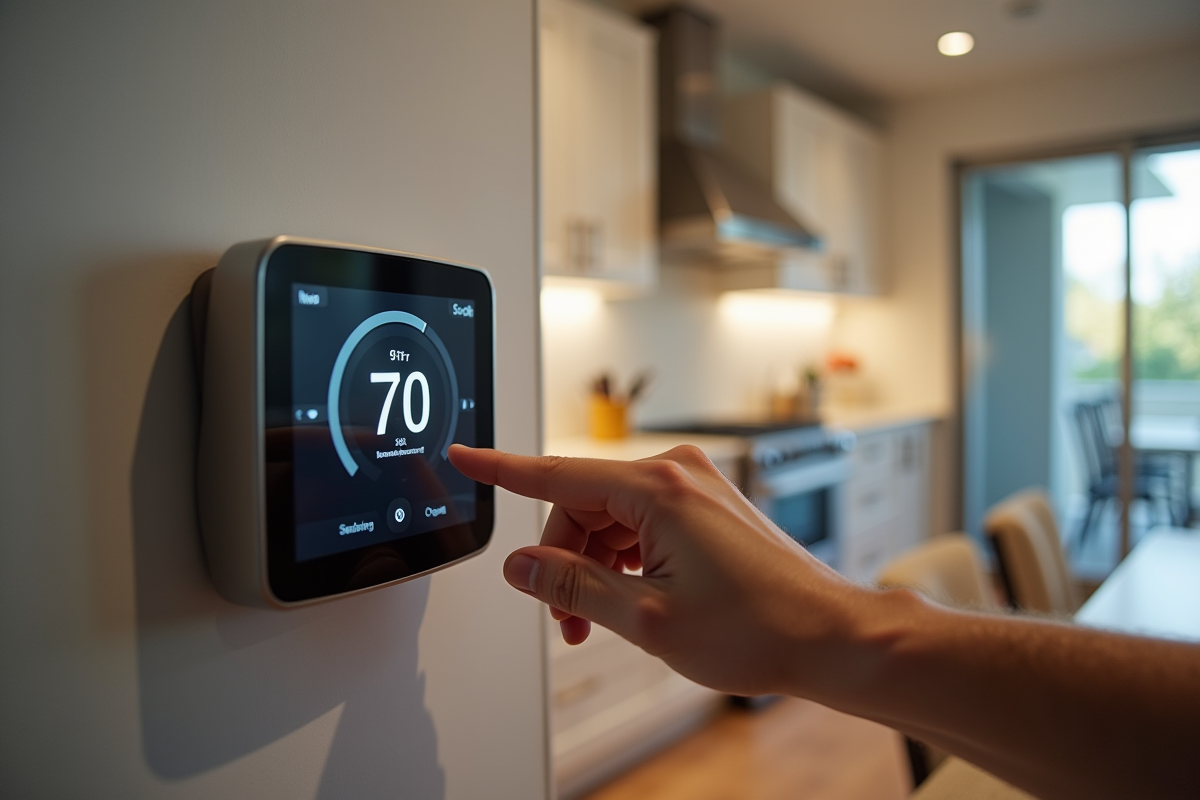
Optimizing Thermal Comfort Through Proper Settings
To achieve optimal thermal comfort, adjust your thermostat settings according to your lifestyle. Adapt the temperature based on the use of rooms and times of the day.
Energy Savings Through Regulation
Heating accounts for 65 to 70% of energy consumption in a home. Lowering the temperature by 1°C reduces this consumption by 7%. Lowering the heating at night or during absences can save up to 25% on your energy bill.
| Scenario | Recommended Setting |
|---|---|
| Night | 16-18°C |
| Prolonged Absence | 8-degree thermostat |
| At Home | 19-21°C |
Factors Influencing Thermal Comfort
Thermal comfort does not solely depend on ambient temperature. Also consider the characteristics of the home, humidity levels, wall temperatures, and air speed. Good insulation reduces heating needs and improves comfort.
- Ambient Temperature: keep it within a comfortable range.
- Insulation: check insulation to reduce heat loss.
- Humidity: an appropriate level improves well-being.
Using Thermostatic Valves
Thermostatic valves allow you to limit the temperature of each room by adjusting the flow of hot water. Use them to regulate the temperature according to the specific needs of each room, thus optimizing comfort and energy savings.