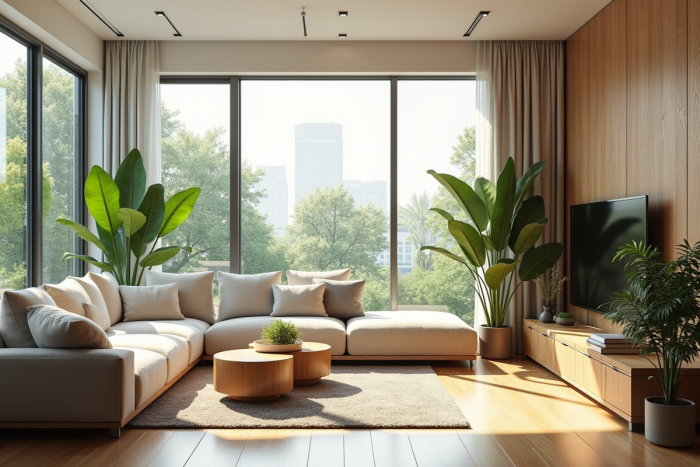
Modern living spaces are no longer just about simple walls and a roof. They become thoughtfully designed environments where every element matters. Carefully arranging your interior not only creates a pleasant atmosphere but also maximizes the efficiency of each room. A successful layout requires regular maintenance to preserve the beauty and functionality of the home.
Eco-reflection is emerging as an essential dimension in this approach. Choosing sustainable materials, energy-efficient solutions, and environmentally friendly practices helps reduce the ecological footprint of your home while achieving substantial savings.
Layout: optimizing space and comfort
The layout of domestic space proves to be a complex yet necessary task for creating a balanced and functional environment. Layout projects, such as those carried out by the PREUSE Project, aim to maximize the efficiency of materials while adhering to ecological criteria.
The PREUSE Project, in collaboration with partners such as the Commune of Wiltz, the City of Lorient, and the Fabrique des Quartiers, is developing recovery centers at various scales. These initiatives allow for better management of construction materials from public projects, facilitating their reuse. These projects offer innovative solutions for sustainable construction.
The city of Utrecht and the city of Mechelen have initiated pilot operations to demonstrate the positive impact of these practices. These initiatives are part of an ecological transition approach, where interior layout goes beyond aesthetics to incorporate sustainability and resource-saving criteria.
For more tips on layout and space optimization, check out the practical guides available at déclarationexpertise.fr. This site offers a wealth of information on best practices in energy renovation and thermal insulation. 
Maintenance and eco-reflection: towards a sustainable home
Regular maintenance and eco-reflection are essential pillars for ensuring the sustainability of our homes. The Commune of Wiltz stands out for its initiatives in circular economy. Under the leadership of Chantal Kauffmann, alderwoman responsible for circular economy, and Patty Koppes, project manager, the commune is committed to creating a reuse center for recovered construction materials.
Water management and the preservation of biodiversity are major aspects. The Circular Innovation HUB offers training aimed at raising awareness and educating citizens on best practices. These trainings cover various topics such as the use of natural materials, like sheep wool for insulation, and the integration of solar panels to reduce greenhouse gas emissions.
- Use of natural materials: sheep wool, hemp, flax.
- Installation of solar panels for renewable energy.
- Effective management of water and aquatic natural environments.
The Climate and Resilience Law imposes strict standards to reduce the ecological footprint of constructions. Pilot projects, such as those initiated by Sabrina Morn, Head of the technical service at the commune of Wiltz, demonstrate the effectiveness of ecological solutions for home maintenance.
Consider the impact of each construction and maintenance choice on the environment. The commune of Wiltz, in partnership with the Circular Innovation HUB, sets an example by combining innovation and tradition for sustainable resource management.