
Mountains fascinate with their beauty and call to adventure. Yet, every year, hikers find themselves in difficulty, often due to lack of preparation. Hiking at high altitude presents specific risks that everyone must be aware of before putting on their boots.
Whether it’s for a few hours’ walk or a multi-day expedition, proper preparation can save lives. Knowing potential dangers, such as sudden weather changes, rough terrain, and the risk of hypothermia, is essential. Good planning and the right equipment make all the difference.
Essential preparations before going hiking
Before heading out for a hike, meticulous preparation is essential. A good hiker leaves nothing to chance. Consider the following elements to ensure your safety.
- Proper equipment: Sturdy hiking boots, warm and waterproof clothing, a map, and a compass are essential. Don’t forget high SPF sunscreen.
- Weather forecasts: Always check the weather reports before you leave. Conditions in the mountains can change rapidly, making trails impassable.
- First aid kit: A basic kit should include bandages, gauze, disinfectant, hand sanitizer, a tick remover, scissors, and a survival blanket.
First aid kit and emergency information sheet
The first aid kit is a non-negotiable item. Every hiker must keep an updated list of the kit’s contents and report any expired products to the pharmacist. Medications are strictly personal and prescribed by a healthcare provider. They should not be offered to others.
The emergency information sheet is also fundamental. It includes ongoing treatments, existing medical conditions, emergency procedures to follow, as well as the contact details of the healthcare provider and the person to notify in case of an accident.
Insurance and rescue costs
In the event of a serious accident, helicopter transport may be necessary. Helicopter rescue costs can be significant, and it’s wise to check your insurance coverage before you go. For more information, consult the page titled ‘Helicopter rescue costs: who pays in case of emergency in the mountains? – Voyagesetdecouvertes.com’.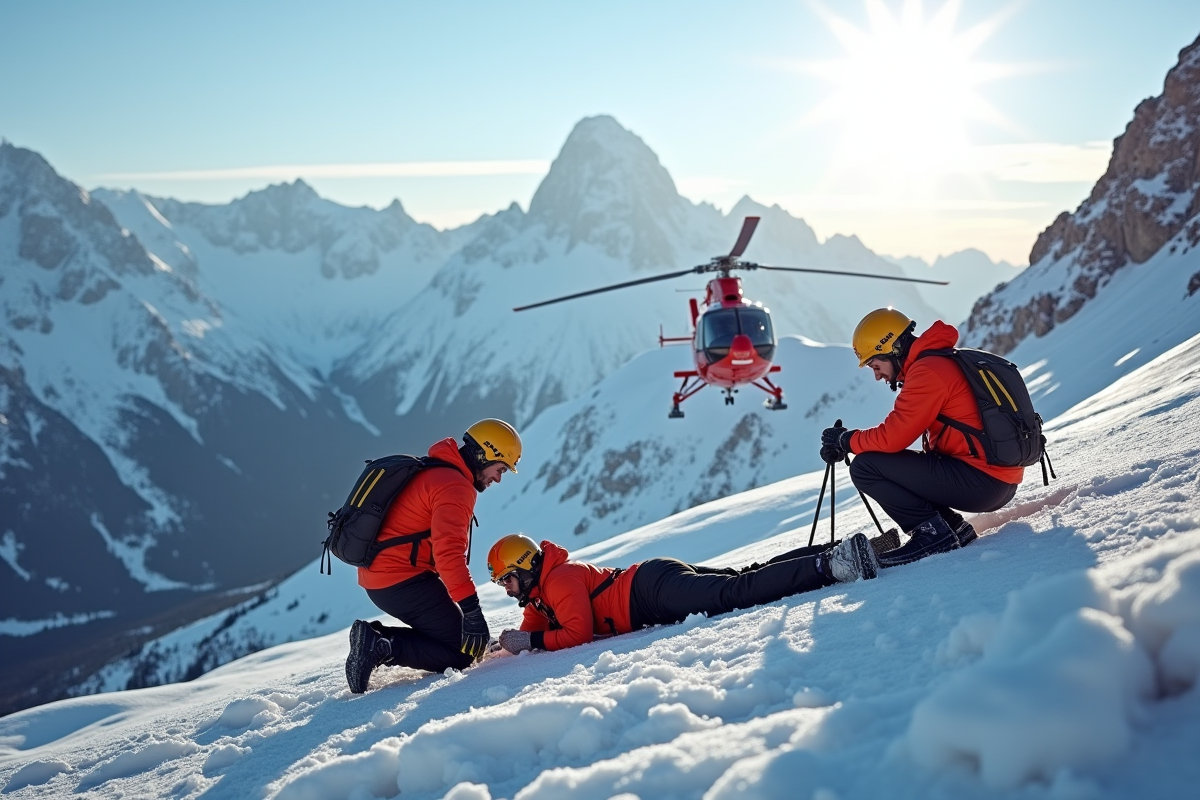
How to react in case of an emergency in the mountains
In the face of an accident in the mountains, the speed and effectiveness of your actions are crucial. Here are the steps to follow to maximize your chances of managing such a situation effectively.
Assess the situation: First, assess the situation and ensure that you do not put your own safety at risk. Identify potential hazards such as falling rocks or extreme weather conditions.
Call for help: Dial 112, the European emergency number. Provide precise information about your location, the nature of the accident, and the condition of the victim(s). If possible, use your emergency information sheet to provide essential medical details.
First aid steps: While waiting for help, provide first aid. If possible, move the victim to a safe place and shield them from the elements. Use your first aid kit to treat immediate injuries. The survival blanket is particularly useful for preventing hypothermia.
Stay in communication: Keep your phone handy to receive additional instructions from rescuers. Also, inform the person to be notified in case of an accident mentioned on your emergency information sheet.
Coordinate with rescuers: Once help arrives, follow their instructions. They are trained to handle these situations and have the necessary equipment. The hiker should be ready to provide any additional information.
Follow these steps to ensure everyone’s safety. Accidents in the mountains require composure and method. Be prepared, and these reflexes can save lives.