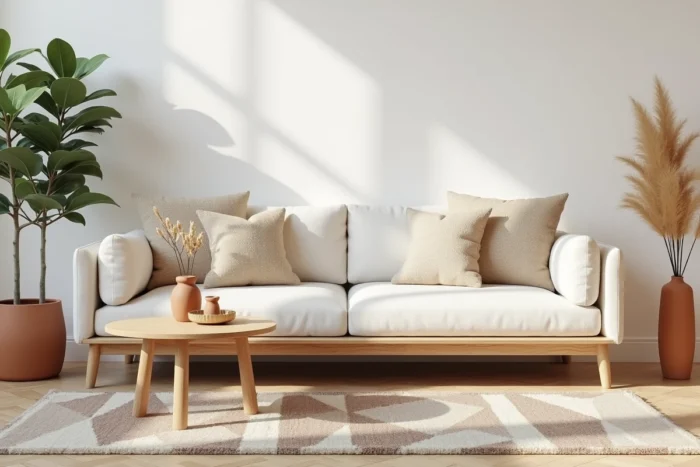
Recent open-plan apartments pose a problem rarely addressed in decor magazines: noise. Reverberation on polished concrete, echoes between the kitchen and living room, conversations that travel across the room unfiltered. Modern decor, often associated with smooth surfaces and open volumes, amplifies these acoustic nuisances instead of mitigating them.
Finding the balance between a sleek aesthetic and real sound comfort requires material and layout choices that go beyond mere taste.
Modern decor and acoustics: what smooth surfaces cause
A typical modern interior accumulates reflective materials: concrete, glass, large-format tiles, metal. These surfaces reflect sound instead of absorbing it. In an urban open space, where the kitchen, living room, and workspace share the same air volume, every noise propagates without obstacles.
Textile coverings and upholstered furniture play the opposite role. A fabric sofa, a long-pile rug, or a thick curtain capture some of the sound waves. The difficulty arises when one wants to maintain a minimalist ambiance: removing textiles amounts to eliminating the natural acoustic absorbers from the room.
Acoustic wall panels, long confined to recording studios, are now available in decorative formats. Molded felt, fabric-covered foam, spaced wooden slats on an absorbent backing: these solutions integrate as a complete wall decor element. To explore decorative pieces that combine function and style, madmoizl-deco.com offers a catalog focused on current trends.
Sound-absorbing materials compatible with a sleek style
Adapting interior decor to sound constraints does not mean sacrificing modernity. Several materials absorb sound while fitting into a contemporary aesthetic.
- Wall cork, available in tiles or rolls, absorbs mid-range frequencies and adds a warm texture without visually overloading the room
- Heavy linen curtains, falling from ceiling to floor, filter echoes between the living area and the kitchen in an open plan
- Open bookshelves, filled irregularly (books, objects, empty spaces), fragment sound waves and create a natural acoustic diffusion effect
- Dense-leaved plants, arranged in groups, contribute to sound absorption while responding to the biophilic trend
A common mistake is to address acoustics as an afterthought, adding visible foam panels that clash with the rest of the room. Integrating sound absorption from the design stage avoids aesthetic compromises.
Colors and ambiance: when the palette influences noise perception
The link between color and sound sensation is not direct, but the palette chosen for a space influences the overall perception of comfort. A completely white living room, with smooth walls and cold lighting, seems noisier than it actually is. The brain associates visually hard spaces with a more aggressive sound experience.
Adding muted tones (terracotta, sage green, blue-gray) on a wall or through textiles creates a sense of enclosure. This approach works particularly well in the dining room or office corner, where concentration and conversation compete for the same space.
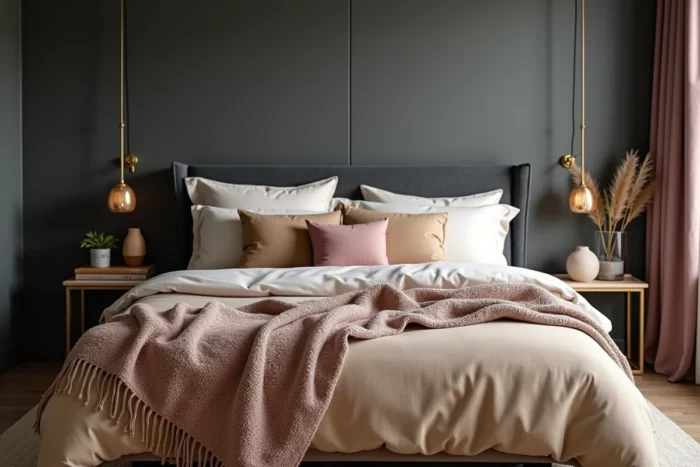
Warm colors combined with absorbing materials reduce the sensation of reverberation without altering the structure of the home. A simple change of sofa cover, cushions, or rug is enough to transform the ambiance of a room while improving its acoustic behavior.
Furniture arrangement in an open living room: thinking in sound zones
In an open space, furniture arrangement replaces walls. A low piece placed between the living room and the kitchen does not block light but creates a partial break in the sound path. Open high shelves, positioned perpendicular to the wall, function as visually light sound barriers.
Three principles guide the acoustic layout of a modern interior:
- Place noise sources (television, speakers, kitchen) against a wall treated with an absorbing material rather than facing a bay window that will reflect sound throughout the room
- Create textile islands around rest areas (rug under the sofa, curtains behind the reading nook) to capture sound locally
- Avoid leaving large wall surfaces completely bare, hanging textile art, contemporary macramé, or felt-backed frames
The current trend for modular sofas serves this logic well. Their high back, often padded with dense foam, acts as a soft acoustic barrier between two living areas. The choice of fabric also matters: corduroy absorbs sound better than smooth leather.
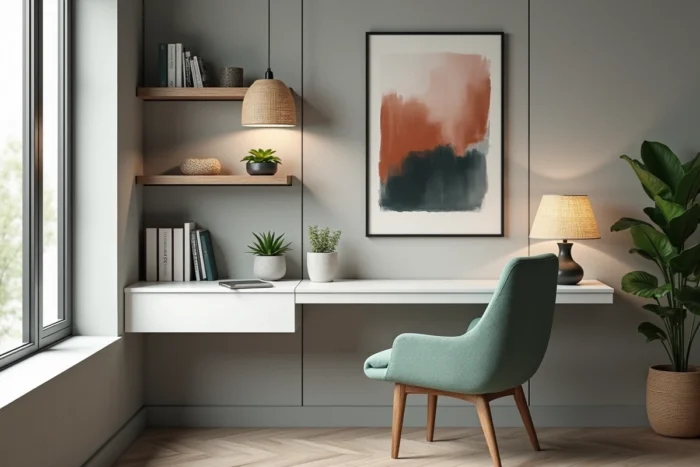
The case of the office corner in the living room
Remote work has made this a daily issue. A desk placed in a corner of the living room without acoustic treatment exposes one to all the nuisances of the room.
A felt panel fixed to the wall behind the screen, a small rug under the chair, and a shelf filled on the side are enough to create a relative sound bubble. These DIY solutions do not match movable partitions, but they have the advantage of not sacrificing anything decoratively.
Decor trends and concrete ideas for reducing noise without a complete overhaul
Transforming the acoustics of a room does not require major renovations. Targeted interventions produce a noticeable result in just a few hours.
Replacing a Venetian blind with a thick fabric curtain immediately alters the reverberation of a living room. Adding a large rug under the dining table reduces the noise of chairs and cutlery. Hanging a modern tapestry or a perforated wood panel on the wall most exposed to sound completes the setup.
Each added textile surface reduces the reverberation time of the room. The accumulation of small interventions produces a cumulative effect far greater than a single large modification.
Current trends in modern decor facilitate this approach. The return of raw wood, the popularity of natural tones, and the enthusiasm for artisanal materials (looped wool, porous ceramics, woven rattan) converge towards more absorbent interiors than the all-lacquered decors of previous years. The contemporary organic style reconciles sleek aesthetics and acoustic comfort, which partly explains its success in urban open-plan housing.