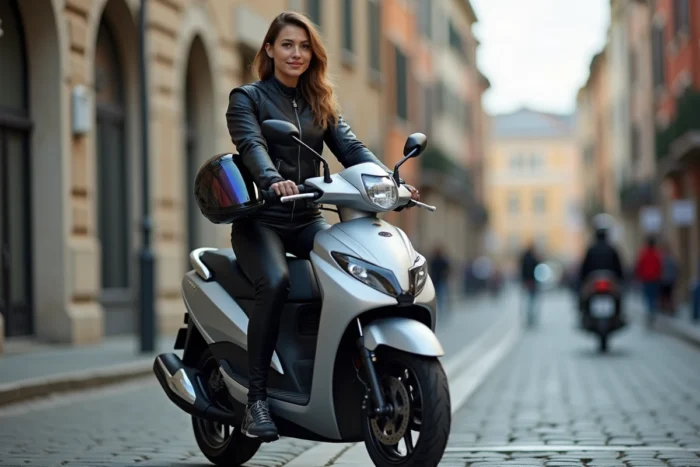
A maxi scooter rarely weighs less than 200 kg and often features a seat height designed for riders of 1.75 m and taller. For someone measuring less than 1.65 m, being able to place both feet flat on the ground when stopped becomes a safety criterion as much as a comfort one. Three technical parameters determine the actual accessibility of a maxi scooter: seat height, width at the inseam, and center of gravity position.
Seat Width and Central Tunnel: Criteria Not Shown in the Technical Sheet
The seat height, expressed in millimeters on manufacturer sheets, tells only part of the story. Two maxi scooters with the same measurement can offer very different accessibility depending on the shape of the seat.
The width of the seat at the inseam is as important as its height. A narrow seat at the front allows the thighs to drop more vertically, which gains several centimeters of ground reach. Feedback from low-speed handling courses aimed at smaller riders, developed in France since 2023, confirms this point: trainees under 1.65 m systematically prioritize seat width and the shape of the central tunnel before even looking at the official measurement.
The central tunnel, on flat floor models, also influences posture. A wide tunnel forces the knees apart, raising the pelvis and reducing ground reach. Some models like the Honda Forza or the Yamaha XMAX offer a relatively narrow tunnel that facilitates foot placement. To delve deeper into this topic, a dedicated guide on maxi scooters for smaller riders on Affaires du Jour details the actual measurements model by model.
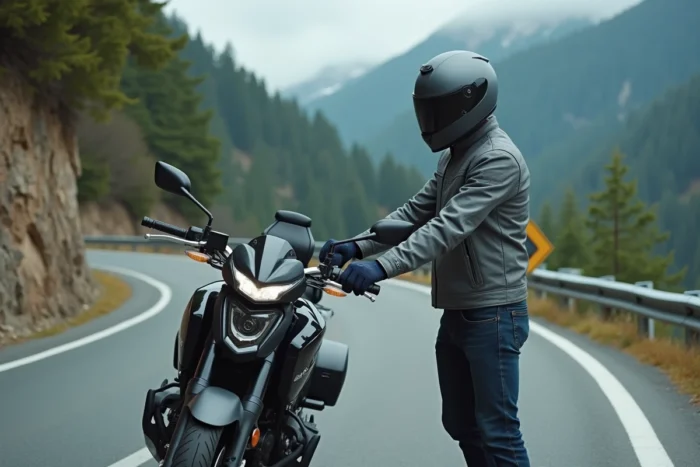
Center of Gravity and Weight: What Makes a Maxi Scooter Maneuverable at a Standstill
A heavy maxi scooter is not necessarily difficult to handle for a smaller rider, provided its mass is concentrated low. A low center of gravity compensates for part of the total weight by limiting the pendulum effect during low-speed maneuvers or when stopped.
Models with small diameter wheels (below 15 inches) tend to lower the overall height of the chassis. The Suzuki Burgman 400, for example, combines a low floor and a fuel tank placed under the seat, which brings the weight closer to the ground. In contrast, some sporty maxi scooters position the engine higher to allow for more lean angle in turns, making it more demanding to hold at a standstill.
Check Maneuverability in Real Conditions
The most reliable test remains to sit on the scooter in the dealership, with the engine off, and then move it slowly while keeping it upright. If both feet do not touch the ground simultaneously, there are three solutions:
- Have the seat shaved down by a motorcycle upholsterer, which removes a few millimeters of foam thickness without compromising comfort on short rides
- Install lowering suspensions or appropriate lowering links for the model, when the manufacturer or a preparer offers them
- Opt for shoes with thick, rigid soles, a simple solution that adds one to two centimeters of ground reach
Some riders combine these adjustments. A shaved seat combined with slightly lowered suspensions can gain up to three centimeters of effective reach, which radically changes daily comfort.
Maxi Scooter Models Suitable for Shorter Riders
Rather than an arbitrary ranking, here are the models that frequently appear in feedback from riders under 1.65 m, along with the technical reasons for their accessibility.
Honda Forza 350 and Forza 750
The Forza 350 offers one of the lowest seats in its category. Its narrow front seat makes it easier for those under 1.60 m to place their feet. The Forza 750, heavier and more powerful, maintains this philosophy of accessible seating. Honda has also specifically worked on the Asian versions of these models since 2024, further refining the seat for the Japanese market, where the average rider size is smaller.
Yamaha XMAX 300
The XMAX 300 remains a reference for smaller builds thanks to a slim central tunnel and a contained seat height. The riding position, slightly forward, brings the rider closer to the handlebars and allows for better control of the scooter’s weight at low speeds. The XMAX 300 combines accessibility and city-highway versatility without sacrificing storage space under the seat.
Kymco Downtown 350i
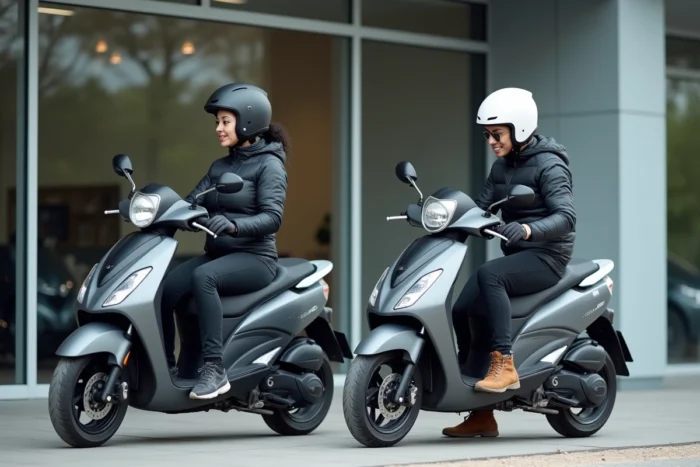
Kymco has positioned the Downtown 350i as a compact urban maxi scooter. The smaller rear wheels naturally lower the seat. The weight remains moderate compared to competitors, making it maneuverable in traffic for a smaller rider.
Suzuki Burgman 400
The Burgman 400 focuses on grand touring comfort with a wide seat, but its seat height remains reasonable. The very low center of gravity, thanks to the tank placed under the seat, makes the Burgman 400 surprisingly stable despite its imposing size. A shaved seat makes it accessible for riders around 1.60 m.
Asian Versions and Electric Maxi Scooters: What Changes for Smaller Riders
Since 2024, Honda, Yamaha, and Kymco have discreetly lowered the seat height or refined the seating on certain models intended for the Asian market, without altering the European technical sheets. Comparing specifications between the Japanese and European versions of the same model can reveal differences of several millimeters in seat height.
On the electric side, the segment is starting to offer interesting alternatives. The BMW CE 02, for example, was designed with particular attention to seat height and center of gravity. Alexander Buckan, head of vehicle design at BMW Motorrad, specified during the model presentation that the ergonomics explicitly targeted riders under 1.65 m.
Compact electric maxi scooters rethink ergonomics around the rider’s size rather than adapting it afterward. This approach marks a shift in philosophy compared to traditional thermal models.
Choosing a maxi scooter when measuring less than 1.65 m involves a test ride at the dealership, a critical look at the seat width (not just its height), and sometimes a few simple modifications. The models mentioned here are not the only viable options, but they share a common point: ergonomics that do not make smaller riders second-class passengers.